How to choose the best AI Training Workshop for your team
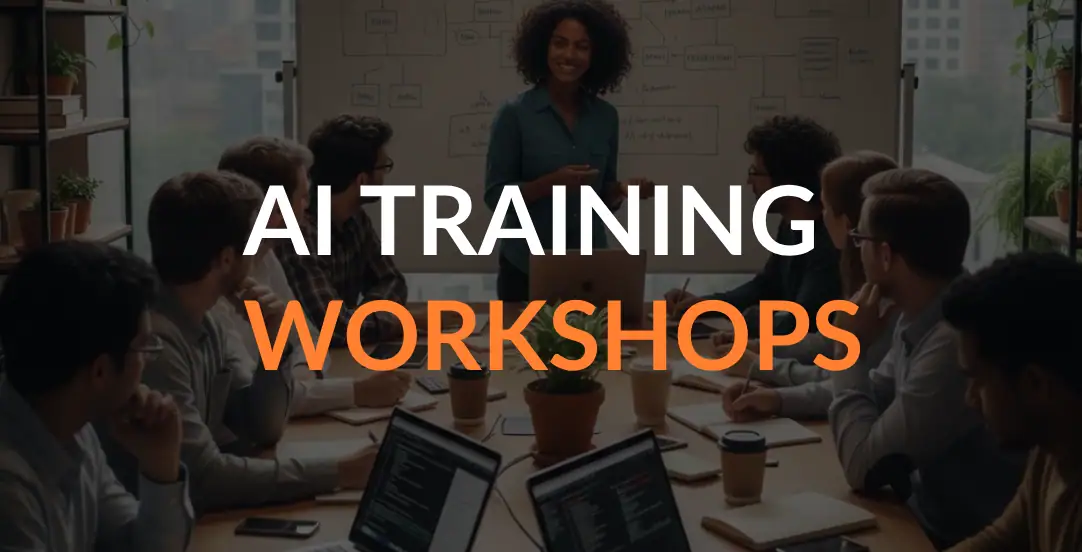
Choosing the right AI training workshop is essential to ensure effective learning, develop strong security expertise, and gain practical experience that can be applied immediately in your organization.
Key takeaways
- Match workshop type to your team’s needs by selecting from introductory, developer, security, or executive-focused workshops for targeted and relevant learning.
- Prioritize hands-on labs to build real-world skills – practical exercises and interactive sandboxes deepen understanding far beyond theoretical concepts.
- Evaluate instructor expertise and industry relevance because skilled trainers and up-to-date content ensure valuable, actionable knowledge.
- Focus on AI security modules to prepare for enterprise challenges – workshops with specialized security training reinforce model governance and risk management practices.
- Balance cost against return on investment and post-training support, considering certifications, follow-up resources, and ongoing assistance for sustained learning impact.
Choosing an AI training workshop requires carefully assessing your team’s goals, preferred delivery methods, and security priorities to achieve measurable, practical outcomes. The following sections explore how to select the best workshops tailored to diverse professional roles and organizational objectives across industries such as finance, healthcare, marketing, and beyond.
Understanding types of AI workshops
Selecting the right type of AI workshops is fundamental for aligning training outcomes with your team’s expertise and business goals. Workshops typically serve four core audiences. Introductory AI workshops provide a foundational overview of AI concepts, ideal for beginners, business leaders, or professionals seeking strategic awareness across all industries – from education to environmental science.
Developer and data scientist workshops focus deeply on practical skills through coding, machine learning model development, and use of leading frameworks like TensorFlow or PyTorch, often delivered through immersive AI labs. These workshops are essential in sectors like e-commerce or healthcare where building and deploying custom AI models drive innovation and efficiency.
Security-focused workshops address a rapidly growing need for enterprises aiming to mitigate AI-related risks. These top-rated sessions train teams in model governance, threat detection, privacy, and compliance, often using real-world simulations that reveal vulnerabilities. Industries subject to strict regulations, such as finance and healthcare, especially benefit from these workshops.
Meanwhile, executive and strategy workshops equip leadership with the knowledge to guide AI adoption strategically. They focus on ethical considerations, regulatory frameworks, and AI governance without delving into complex technical details, helping senior staff across all fields make informed decisions.
Understanding your team’s current skills and goals ensures workshop content is meaningful, fostering continuous upskilling and long-term organizational growth.
Delivery formats
The format of AI workshop delivery greatly influences engagement and learning effectiveness. Online AI workshops provide unmatched flexibility and scalability, especially for remote or globally distributed teams. They combine live interactive sessions, on-demand video content, and real-time Q&A, alongside virtual sandboxes enabling participants to practice coding and AI workflows remotely from any location.
In contrast, in-person workshops foster a highly focused learning environment with immediate instructor support and hands-on labs that deepen comprehension of complex topics like AI security. This format benefits learners who thrive on face-to-face interaction and real-time collaboration, a common preference in finance, healthcare, and engineering sectors where nuanced understanding is critical.
The hybrid approach combines these advantages by allowing participants to complete foundational modules online before engaging in onsite labs and workshops. This blend maximizes convenience without sacrificing immersive, practical experience.
Crucially, hands-on labs form the backbone of all effective formats. These labs allow experimentation with AI tools, simulated deployment, and security testing, which help build confidence and solidify skills. Incorporating hands-on AI labs in any training format ensures learners achieve job-ready expertise.
Key curriculum components in AI training workshops
A well-structured curriculum is essential for a comprehensive AI learning journey. The most effective AI training workshops integrate iterative hands-on exercises and project-based learning aligned with real-world challenges. For instance, developer tracks might include dataset preprocessing, model tuning, debugging, and deployment exercises within interactive labs.
Alongside these tasks, exposure to current industry-standard tools and platforms – such as Python, Jupyter notebooks, AWS SageMaker, and Google Vertex AI – ensures that participants can immediately translate their training into workplace use. This relevance spans industries like marketing analytics, environmental data modeling, and legal tech automation.
Clear prerequisites communicated upfront help tailor the workshop experience to participant skills, improving engagement and learning outcomes. Many top-rated programs also provide certifications and tangible milestones like hackathons or project deliverables. These features motivate learners and give employers verifiable proof of skill acquisition, thus enhancing the return on training investment.
| Curriculum component | Description |
|---|---|
| Practical exercises | Hands-on activities simulating real business problems across diverse domains |
| Tools and platforms | Integration of cloud services, AI frameworks, and interactive notebooks |
| Prerequisites | Skill level requirements clearly stated to match learners |
| Certifications and outcomes | Credentials and assessments confirming mastery and progression |
Criteria to identify top-rated AI security workshops and labs
When evaluating top-rated AI security workshops and labs, several critical factors optimize investment and organizational readiness. Instructor expertise ranks highest experienced trainers with deep knowledge of AI security, governance, and compliance bring invaluable insights and reflect current industry best practices.
The workshop’s complexity must align with the target audience to maintain engagement without causing overwhelm. Matching beginner-level teams to foundational content or seasoned professionals to advanced sessions prevents dissatisfaction.
Cost evaluation should consider the potential return on investment, including the value of certification, access to immersive AI labs, and quality post-training support such as refresher modules or active online communities. Workshops incorporating specialized security and compliance modules are particularly vital for industries under regulatory scrutiny – such as finance, healthcare, and legal services equipping teams with frameworks for model evaluation, threat detection, and risk mitigation.
Lastly, the technology environment of the workshop can be a key differentiator. Programs that utilize cutting-edge AI-powered tools, such as Airtable’s intelligent field agents and API integrations, offer hands-on learning aligned with industry automation trends, deepening skill mastery and applicability.
Comparison of evaluation criteria
| Criterion | Importance | What to check |
|---|---|---|
| Instructor expertise | Critical | Proven experience and relevance to current AI security challenges |
| Audience level | Essential | Alignment with participants’ existing skills and roles |
| Cost vs ROI | Strategic | Value of certification, labs access, and post-training resources |
| Security module inclusion | Vital for enterprises | Comprehensive coverage of governance, risk, and compliance topics |
| Technology support | Enhances learning | Integration of latest AI tools and automation capabilities |
Practical steps to choose the best AI labs for your team
Selecting the ideal AI workshop requires a deliberate, step-by-step approach. Start by diagnosing your team’s skill gaps and defining specific learning objectives, whether aiming for foundational knowledge, advanced development skills, or specialized security expertise.
From there, choose a workshop type that fits those goals: introductory for broad understanding, developer-focused for technical skill-building, security-centric for risk management, or executive strategy sessions for leadership insights.
Next, weigh your team’s logistical preferences and constraints when deciding on the delivery format. Opt for online workshops for maximum flexibility, in-person formats for interactive engagement, or hybrid models that combine both advantages. Delve into the curriculum to confirm the inclusion of practical labs, up-to-date toolsets, certifications, and interactive AI labs aimed at reinforcing real-world application.
Verify instructor credentials to ensure content currency and industry relevance, and confirm that learning outcomes are clearly measurable. Finally, consider the total cost in relation to added benefits such as ongoing support, refresher sessions, and community access, which extend skill retention and organizational ROI beyond the workshop duration.
Real-world examples of successful AI workshops and labs
Real-world case studies illustrate the significant impact of investing in quality AI training workshops. A Fortune 500 company conducted an enterprise AI security workshop where data scientists engaged in simulated adversarial model attacks through immersive labs. This hands-on experience enabled the team to identify vulnerabilities and implement mitigation strategies, ultimately reducing AI-related risks by 40%. The initiative demonstrated clear, quantifiable improvements in threat resilience.
Another multinational technology firm ran a developer workshop utilizing cloud-based AI labs to train participants on building end-to-end machine learning pipelines using AWS and Google AI platforms. This workshop accelerated model deployment speed by 30%, showcasing the measurable value of cloud-centric, practice-oriented training in fast-paced technical environments.
Meanwhile, a major financial institution’s executive workshop focused on AI governance helped leadership formulate robust risk management policies, enhancing audit compliance and ethical AI adoption. This highlights how tailored AI workshops can empower decision-makers across industries from finance to healthcare by combining strategy with regulatory insight.
Incorporating Airtable’s 2025 AI features
Airtable’s October 2025 AI feature upgrades introduce powerful capabilities to enhance AI workshops with advanced automation and interactivity. AI-powered field agents streamline hands-on lab workflows by automating repetitive tasks such as data retrieval, linked record suggestions, and live internet searches. This reduces manual overhead and boosts learner engagement, allowing workshop facilitators to focus on higher-value training activities.
Workshops can also leverage formula field AI assistance that enables participants to create complex formulas through natural language commands. This lowers technical barriers, accelerates learning, and supports a wider range of skill levels.
Optimizing these AI features involves best practices such as linking multiple context fields for tailored AI suggestions, managing internet search credit consumption effectively during labs, and enabling toggles to control AI-driven record suggestions. Incorporating JavaScript API integrations to batch update records or interact with external data sources introduces participants to automation skills essential in modern AI workflows, reinforcing practicality and cutting-edge relevance across sectors.
What AI workshops will take place in February 2026
In February 2026, the 4th edition of the offline AI Workshop for iGaming will take place. This time it is a full-day edition, led by Bartek Borkowski.
The main workshop modules will be:
MODULE 1: Preparing the team for AI & Automation
You’ll learn:
- How to assess team readiness: people, data, ownership, adoption, and internal blockers
- Three proven ways to get teams to use AI and automation without resistance
- How to avoid the most common internal failure patterns in iGaming organizations
MODULE 2: Your toolset & advanced use of AI
You’ll learn:
- The basics of good prompting for operational and managerial tasks
- Advanced use of ChatGPT and Perplexity, not only asking questions
- How AI browsers (for example Comet) change research, analysis, and monitoring
MODULE 3: Micro-automation for daily operations
You’ll learn:
- How to find low-risk, high-impact micro-automations
- How to match automation to your current processes
- Examples of automations that teams really use every day
MODULE 4: ROI & Risk Prioritization
Same process. Same company. Very different results.
You’ll see:
- A real case study: using AI and automation on the same process with different ROI results
- How to evaluate ROI and operational risk before implementation
- How to defend your decisions inside the company using data, not opinions
MODULE 5: AI vs Automation Decision Framework
You’ll get:
- A clear and repeatable framework to decide:
- What needs AI
- What should be automated
- What should stay the same
- A tool you can reuse immediately across teams and projects
The workshops are for all people who need to make decisions at work every day. This includes both team management and system management.
The workshop will take place on 24 February 2026 in Spain.
More information: https://luma.com/fk5hi1dw
Pro tips for choosing training workshops
Leveraging hands-on labs is one of the most effective ways to deepen understanding and retention in AI workshops, particularly for technical teams. Prioritize workshops that emphasize practical components enabling experimentation and real-world application.
For enterprises, ensuring workshops include focused training on model risk and governance is crucial to safeguarding investments and maintaining compliance with evolving regulations.
Common pitfalls include mismatching participant skill levels, leading to disengagement if content is too basic or overly complex. Another frequent mistake is undervaluing post-training support; without reinforcement, skills can quickly decay. Selecting workshops offering access to refresher courses, community forums, and ongoing resources can significantly enhance the learning lifecycle and maximize return on investment.
FAQ
What makes hands-on AI labs essential in training workshops?
Hands-on AI labs create practical environments where learners can experiment, build, and troubleshoot AI models in realistic scenarios. This experiential learning bridges the gap between theory and application, crucial for internalizing skills and building confidence in deploying AI solutions effectively within organizations.
How can leadership benefit from non-technical AI workshops?
Leaders attending non-technical AI workshops gain a strategic understanding of AI’s business impact, ethical considerations, and regulatory challenges. This knowledge empowers them to make informed investment decisions, guide responsible AI adoption, and implement governance frameworks effectively without requiring deep technical expertise.
Are hybrid workshop formats effective for skill development in AI?
Hybrid workshops combine online theoretical modules with in-person hands-on labs, offering both flexibility and immersive practice. This format accommodates diverse learning preferences and schedules, enhancing knowledge retention while providing the benefits of direct instructor interaction and collaborative problem-solving.













![How to Fight AI Hallucinations About Your Brand [ready-to-use prompt inside]](https://www.createit.com/wp-content/uploads/2026/02/How-to-Fight-AI-Hallucinations-355x200.jpg)