Rebuilding the digital core – How enterprises are reinventing web development in the AI era

A few years ago, enterprise web development was predictable. You had a big CMS, a few dozen templates, and a release calendar updated every quarter. Websites were digital brochures – stable, expensive, and slow to change.
That era is over.
In 2026, AI has redrawn the map of enterprise digital strategy. The website has turned into the company’s central nervous system – continuously learning, adapting, and connecting people, data, and decisions across every channel.
From page building to system design
The biggest shift is philosophical. Modern enterprise web development isn’t about building pages or managing content anymore. It’s about designing systems that learn from how users interact, automate what used to be manual, and scale across markets without losing brand consistency.
A strong architecture now needs to be modular (headless CMS, microservices, APIs), globally performant, and secure by design. It must also connect seamlessly with AI components for personalization, analytics, and predictive monitoring. In this new landscape, “web development” has merged with product design, data engineering, and machine learning operations.
The invisible work of AI
AI’s true contribution to enterprise web platforms isn’t flashy or visible. It’s in the layers nobody sees – the silent automation that makes the system smarter every day.
AI models analyze usage patterns, content performance, and customer signals, guiding teams toward the next best improvement. They automate testing, code reviews, and page auditing. They flag anomalies before downtime happens and suggest fixes on the fly. Over time, they transform the website into something close to a living organism – able to self‑adjust based on feedback loops.
The question for enterprise teams is no longer whether to use AI, but where it should live in their stack and how much autonomy to grant it.
Why discoverability changed forever
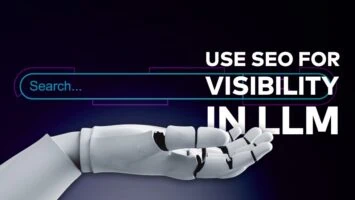
Generative AI has also turned search visibility into a different game. The traditional goal, ranking for keywords, now overlaps with being referenced by AI‑powered systems like Google AI Overviews, ChatGPT, and Perplexity.
These new discovery engines reward clarity, structure, and depth. They look for patterns of consistency and authority across a site, not just metadata. Enterprises that treat their sites as evolving knowledge systems are slowly outpacing competitors who treat them as static marketing assets.
In other words: SEO is shifting from optimization to interpretation. It’s no longer about what keywords you target, but how clearly your digital core explains who you are and why you matter.
Building for adaptability, not perfection
There’s no perfect architecture for enterprise web development in 2026 – only adaptable ones. The best systems evolve fast, connect clean data sources, and support rapid AI experimentation without being rebuilt from scratch.
That’s why the principles guiding new enterprise platforms sound less like IT checklists and more like business design mantras:
- Build architecture that can change without breaking.
- Treat data as the most valuable product you own.
- Keep content alive with structure, governance, and regular revision.
- Measure performance, security, and intent – not just traffic.
- Align ownership across departments, because silos kill scalability.
The compounding value of a smart platform
A well‑built enterprise website should get smarter every quarter. Every bit of behavioral data, every content iteration, and every AI‑assisted optimization compounds over time. That’s what separates digital leaders from laggards: they treat web development as a long‑term growth engine.
As executives move from static dashboards to AI‑summarized decision flows, the enterprise web is no longer “just the website.” It’s the operating layer of the modern enterprise – capable of learning, evolving, and quietly shaping competitive advantage.
The companies that grasp this now aren’t just rebuilding their websites. They’re rebuilding how their organization thinks.
Join the full discussion and original post here: https://www.facebook.com/createITpl/posts/pfbid02eCQd8vm3rNBAN8g9vw2k9aMUNdj5RKF5co6avTQy5mmMgpaGtkSMp4QMqgpj5eoVl













![How to Fight AI Hallucinations About Your Brand [ready-to-use prompt inside]](https://www.createit.com/wp-content/uploads/2026/02/How-to-Fight-AI-Hallucinations-355x200.jpg)